

Category
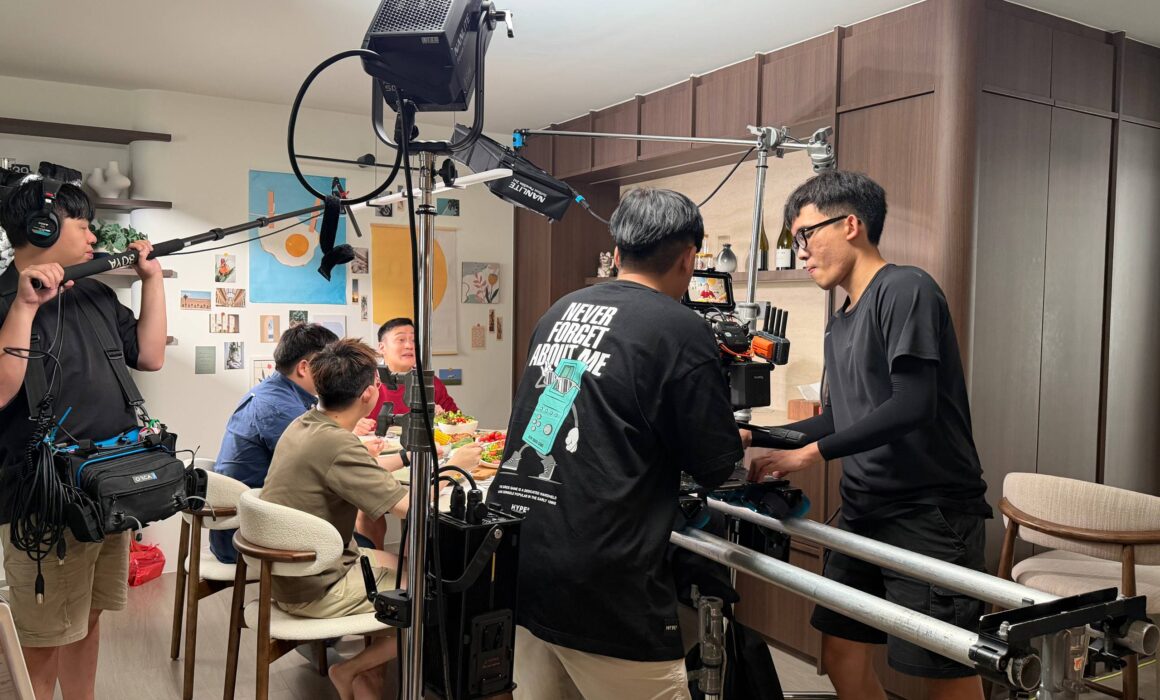
Traditional corporate training video often relies on familiar formats: slide presentations narrated by a presenter, talking-head interviews with executives, screen recordings, or animated explainers. These formats can be effective for communicating information, but they can also make learning feel passive, particularly when employees are expected to absorb policies, procedures, or workplace behaviours through a long sequence of instructions.
For HR and L&D teams, the challenge is not simply producing more training content. It is finding a format that helps employees recognise how those lessons apply to situations they may actually encounter at work.
This is where micro-dramas can offer a different approach.
Micro-dramas are short, character-driven stories built around a specific situation, conflict, or decision. Adapted for corporate learning, the format can turn topics such as compliance, workplace communication, cybersecurity, leadership, and onboarding into realistic scenarios that employees can recognise and discuss.
Rather than replacing instructional content, micro-dramas can provide the context that helps employees understand why that information matters.
The Hybrid Approach: Combining Dramatised Workplace Scenarios with Instructional Voice-Over
A common misconception is that using a micro-drama for corporate training means creating a fully scripted workplace series where actors explain every policy through dialogue.
In practice, a micro-drama can present a dramatised version of a workplace practice, process, or case study, while instructional narration provides the additional information employees need to understand the situation.
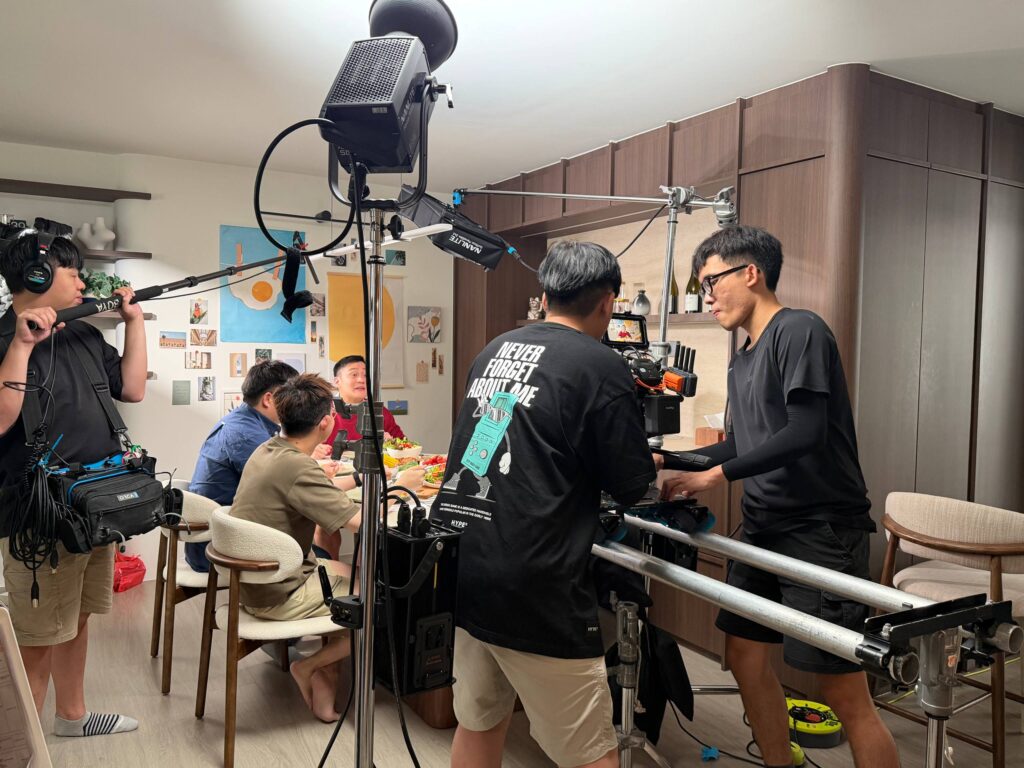
A hybrid corporate micro-drama can use professional actors to demonstrate how a workplace situation might unfold, while a narrator provides context around what is happening, highlights important learning points, and explains why the situation matters.
Dramatised Workplace Scenarios
The dramatized portion of the video focuses on showing a workplace practice or case study as it might happen in real life.
Professional actors can portray situations that employees may recognise, such as a manager conducting a performance conversation, an employee responding to a customer complaint, a team handling a cybersecurity incident, or a new employee going through an onboarding process.
Instead of starting with a policy statement, the video can begin with the situation itself. Viewers see the process, behaviour, or decision unfold before being introduced to the relevant procedure or learning point.
For example, rather than explaining a company’s escalation procedure through a series of slides, the video could show an employee discovering an unusual data anomaly during an important project. The employee has to decide whether to continue working towards the deadline or escalate the issue to the appropriate team.
This gives the training topic a practical context and helps employees understand not only what a procedure is, but also how it can apply in a real workplace situation.
Professional performance is particularly useful here. A hesitation before answering a question, a manager becoming frustrated during a meeting, or an employee appearing uncertain about whether to escalate an issue can communicate the tension of the situation without requiring the script to explain it directly.
The objective is not to turn every training topic into entertainment. The dramatic element should serve the learning objective by making workplace practices, behaviours, and decisions easier for employees to recognise, understand, and discuss.
Instructional Narrative Voice-Over
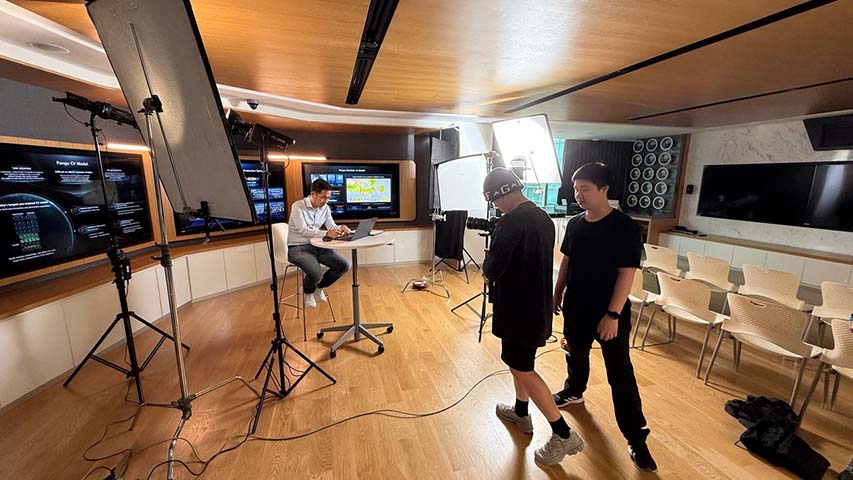
The instructional voice-over provides the second layer of the format.
Instead of making the actors explain the training content directly, a narrator can provide context around the scenario, highlight important moments, and explain the relevant procedure or learning point.
For example:
“At this moment, Marcus faces a choice between hitting the deadline and escalating the data anomaly to compliance.”
The narration identifies the decision point without requiring the character to deliver an unnatural explanation.
Voice-over can also introduce information that would not fit naturally into a workplace conversation, such as policy requirements, process steps, definitions, or an explanation of why a particular action is recommended.
For example:
“What should Marcus do next? Take a moment to consider the risks before continuing.”
The story can then resume and demonstrate one possible outcome.
This structure is particularly useful for topics involving judgement rather than simple information recall. Workplace behaviour, leadership, communication, ethics, compliance, and cybersecurity often involve situations where employees need to recognise a problem and decide how to respond.
The narrator can also provide information that would feel unnatural if delivered through character dialogue. Policies, definitions, process requirements, or explanations of why a particular action is recommended can be introduced without forcing an actor to deliver a long instructional speech.
This keeps the workplace conversation more natural while giving the training content the clarity it needs.
Why the Two Approaches Work Together
The strength of the hybrid model comes from giving each element a clear role.
The drama creates context. It shows the people, situation, pressure, and decision that make the training topic relevant.
The narration provides interpretation. It draws attention to the important moment and explains what learners should take away from it.
The learning objective connects the two. Every scene and narration point should ultimately support the behaviour, knowledge, or decision the organisation wants employees to understand.
For example, a cybersecurity training module could begin with an employee receiving an urgent request for confidential information. The character hesitates, considers the deadline, and nearly sends the information before the scene pauses.
The narrator can then explain the risk, ask learners what they would do, and introduce the organisation’s recommended procedure. The drama then resumes to show how the situation could be handled correctly.
This approach avoids two common problems in training videos. If the video relies only on drama, employees may understand the story without clearly understanding the training message. If it relies only on narration, the content may become another instructional presentation.
The hybrid approach brings the two together: show the situation first, then use focused narration to help learners understand what the situation means.
For corporate training videos, this structure also makes it easier to control the balance between storytelling and instruction. Some topics may require more dramatized scenes, while others may need more explanation from the narrator. The production can be structured around the learning objective rather than forcing every topic into the same storytelling formula.
Subject Matter Experts vs. Professional Micro-Drama Talent
One of the advantages of using a dramatized format for corporate training is that the people providing the expertise do not necessarily need to be the people appearing on screen.
Internal Teams as Subject Matter Experts
Internal department heads, compliance officers, HR leaders, managers, and experienced employees can contribute the knowledge needed to make the training relevant.
They can provide examples of common workplace situations, identify recurring mistakes, explain internal policies, and review scripts for technical or regulatory accuracy.
Their role is to make sure the story reflects the organisation’s actual working environment.
This is particularly important when the subject involves company-specific processes or sensitive areas such as compliance, cybersecurity, workplace conduct, or leadership expectations.
Professional Hired Actors for On-Screen Performance
Professional actors can then translate those scenarios into believable performances.
Small details such as hesitation before answering a question, frustration during a meeting, uncertainty about escalating an issue, or discomfort during a difficult conversation can make a scenario feel more recognisable.
Separating subject-matter expertise from on-screen performance also means internal employees do not need to spend significant time memorising lines or acting out situations outside their usual roles.
The result is a training video that benefits from the organisation’s real-world knowledge while maintaining a polished production standard.
How Micro-Dramas Support Scenario-Based Learning
The value of micro-dramas is not simply that they make training videos more entertaining. Their structure can support a more scenario-based approach to learning.
Instead of presenting one correct answer immediately, a story can introduce a situation and allow learners to consider what they would do next.
Branching Narratives and Decision Points
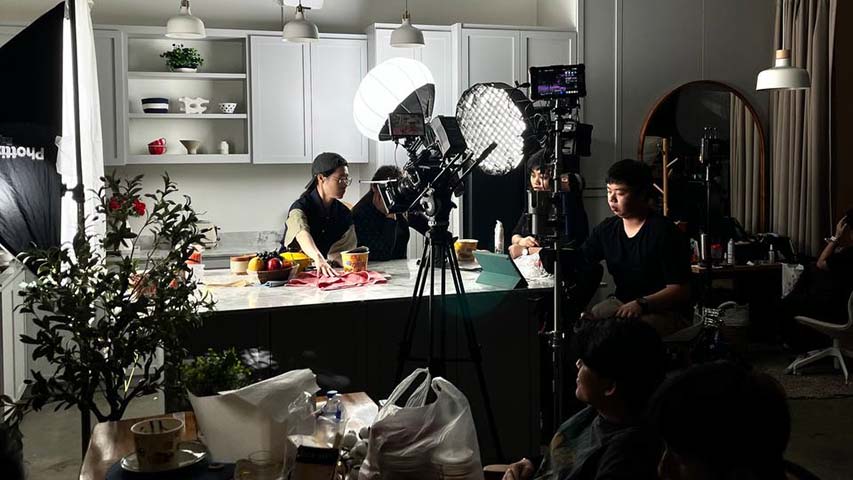
A single workplace situation can be developed into different outcomes.
For example, an episode could introduce a manager who notices that a team member has been struggling with a project.
In one version, the manager ignores the warning signs and focuses only on meeting the deadline.
In another, the manager starts a conversation, listens to the employee’s concerns, and takes steps to address the issue.
Showing different outcomes allows employees to compare decisions rather than simply being told which behaviour is correct.
This structure can also support discussion questions or assessments after each episode, making the video part of a wider learning experience.
Creating a Safe Space to Explore Mistakes
Bespoke training videos in micro-drama can give employees an opportunity to observe mistakes and difficult workplace situations without being personally placed in those situations.
A character might make the wrong decision, handle a conversation poorly, overlook an important procedure, or fail to escalate an issue.
The video can then ask learners to consider what went wrong and what they would have done differently.
This can be followed by discussion questions, alternative scenarios, or an explanation of the recommended approach.
In this way, the story becomes a starting point for reflection rather than simply another format for delivering information.
Reflecting Localised Workplace Dynamics
For organisations operating across Singapore and Southeast Asia, workplace scenarios may also need to reflect the realities of regional teams.
An off-the-shelf training video may use characters, communication styles, or workplace situations that do not closely resemble the employees watching it.
Bespoke training videos in micro-drama format allows organisations to build scenarios around their own working environment, whether that involves cross-functional teams, regional offices, manager-employee communication, customer interactions, or collaboration across different markets.
The objective is not to stereotype cultural behaviour, but to make the situations specific enough for employees to recognise the context in which the learning applies.

Efficient Batch Filming for Corporate Micro-Drama Series
Producing a micro-drama series does not necessarily mean treating every episode as a completely separate production.
With proper planning, multiple episodes can be designed around shared locations, cast availability, props, wardrobe, and production setups.
This makes batch filming particularly useful for organisations developing a series of short training modules.
For example, several scenarios involving the same group of employees could be filmed within a consistent office or meeting-room environment. Production can then move between scenes and episodes according to the setup rather than filming strictly in episode order.
This approach can help organisations make better use of each filming day while maintaining visual consistency across the series.
Why a Controlled Studio Environment Can Help
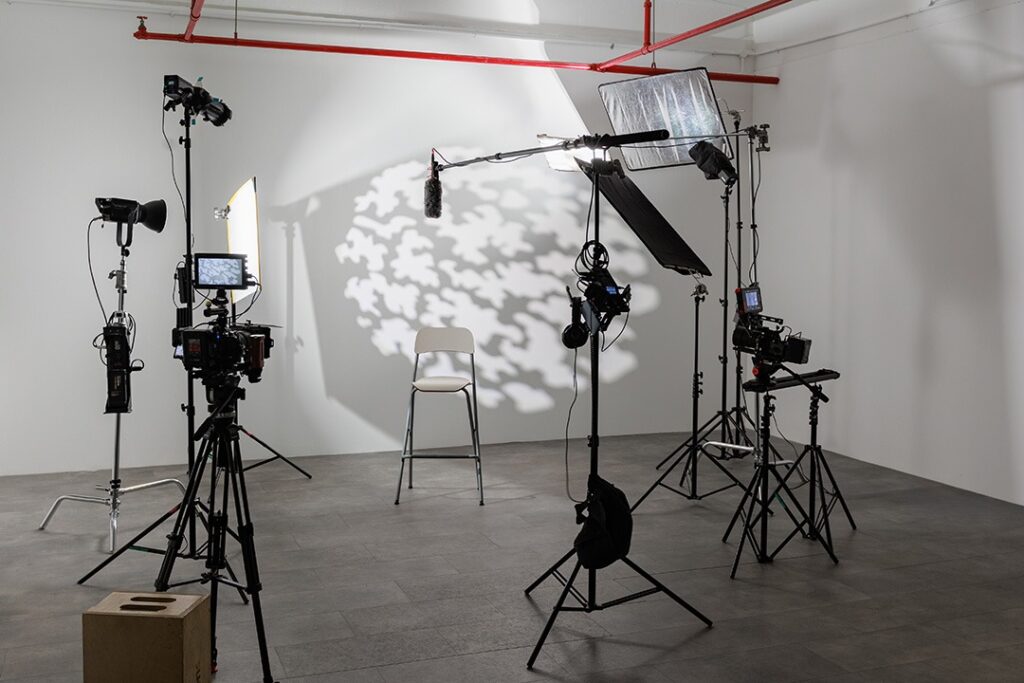
A studio environment can also provide greater control over lighting, sound, framing, and set design.
At Vivid Media’s Kallang studio, corporate scenarios can be planned around modular workplace setups, allowing different training situations to be produced without relying entirely on an external office location.
For organisations producing multiple episodes, this can make it easier to maintain a consistent visual style across the series.
The exact production approach will depend on the number of episodes, locations, cast, script complexity, and required formats.

A New Approach for Forward-Thinking L&D Leaders
Micro-drama is still an emerging format in corporate learning.
Traditional instructional videos remain useful for communicating policies, procedures, demonstrations, and essential information. However, not every learning objective needs to be presented as a presentation or talking-head video.
For topics where context, judgement, communication, or decision-making matter, a short workplace story can provide another way to approach the material.
The key is to start with the learning objective rather than the format.
What situation should employees understand? What mistake commonly happens? What decision needs to be made? What would the consequences look like?
These questions can form the foundation of a micro-drama series.
At Vivid Media, we can help organisations translate training objectives into scripted workplace scenarios, from concept development and scriptwriting to casting, studio production, filming, and post-production.
Frequently Asked Questions:
What role do our internal teams play during a micro-drama production?
Your internal team typically provides the subject-matter expertise behind the training content.
This may include sharing existing training materials, company policies, real workplace scenarios, or common issues employees encounter. Internal stakeholders can also review scripts to ensure that the scenarios accurately reflect the organisation’s requirements.
Vivid Media can then help translate that information into a structured video concept, screenplay, casting plan, and production workflow.
Can micro-dramas be filmed in both horizontal and vertical formats?
Yes, it is technically possible to film in both formats. However, we generally recommend choosing one format for the production. Shooting both formats requires additional planning for framing and composition, which can make the shoot more challenging, especially when corporate teams need to move through filming efficiently.
How do we get started if we have never produced a micro-drama before?
Start with one training topic rather than trying to convert an entire training programme at once.
A discovery session can identify the learning objective, the workplace situation that best illustrates it, the intended audience, and the type of scenario that could work on screen.
From there, the concept can be developed into a proof-of-concept episode before expanding it into a larger series.
This approach allows the organisation to evaluate the format and production workflow before committing to a full programme.
Can these training videos in micro-drama format be created using AI?
Yes, AI can be explored as an option to provide greater flexibility and cost control. However, AI-generated content can sometimes include surreal or unrealistic elements. For specialised training subjects, it may also be difficult to accurately recreate a specific workplace environment, equipment, or process.
For training content where realism and accuracy are important, live-action production may therefore be more suitable.
Partner with Vivid Media to Transform Your Training Content
Corporate training does not always have to begin with a presentation.
For learning topics built around workplace behaviour, communication, judgement, and decision-making, micro-dramas can provide a more contextual way to present the lesson.
By combining realistic workplace scenarios, professional performances, and focused instructional narration, organisations can turn training objectives into stories that employees can recognise, discuss, and learn from.
Interested in exploring micro-dramas for your next corporate training video?
Talk to Vivid Media about developing a custom micro-drama series for your organisation.