




Healthcare decisions are rarely based on clinical information alone. When patients or families choose a medical specialist, a hospital, or a treatment path, they are looking for more than technical specifications, facility tours, and clinical credentials. They are also looking for reassurance, empathy, and confidence in the people providing their care.
For healthcare institutions in Singapore, conventional marketing videos can sometimes focus heavily on facilities, medical technology, clinical credentials, and technical information. While these elements are important, they do not always communicate the human side of healthcare.
To build a stronger connection with audiences, healthcare communications can use human-centric storytelling to bring the people and experiences behind medical services into focus. By filming in real healthcare environments and capturing authentic human experiences, professional healthcare video production in Singapore can help medical brands communicate their expertise while creating a more personal connection with patients and families.
Case Study: Raffles Medical Group – “A Legacy of Care”
The Story
A good example of this approach is “A Legacy of Care”, a brand video produced by Vivid Media for Raffles Medical Group.
Rather than focusing primarily on medical equipment, facilities, or hospital statistics, the video takes a patient-first approach and builds its narrative around the experience of receiving care.
The story follows a father writing a letter to his son and reflecting on significant moments in their lives. Through these memories, the audience sees different stages of the family’s healthcare journey, from the uncertainty of becoming a new parent to a sudden childhood asthma attack that brings the family to hospital.
The hospital is therefore presented not simply as a clinical facility, but as a place where patients and families receive medical care, guidance, and support during important moments in their lives.
How Storytelling Shapes the Video
The video demonstrates several ways that storytelling can communicate the human side of healthcare.
The Human Behind the Uniform
When the young father is nervous about holding his newborn, a doctor reassures him while a nurse provides guidance. Rather than simply showing healthcare professionals performing their roles, the scene focuses on their interaction with the patient.
These small moments help audiences see the people behind the medical roles and communicate a sense of reassurance and care without relying on direct promotional statements.
Emotional Empathy Alongside Clinical Care
When the child experiences an asthma attack and is taken to hospital, the story focuses not only on the medical response but also on the uncertainty experienced by the family.
This gives the clinical situation an emotional context. The audience sees both sides of the experience: the healthcare team’s role in responding to the medical situation and the family’s concern while their child is being treated.
A Unified Care Team
Doctors and nurses are presented as different parts of the same care journey. Their interactions with the family show that healthcare involves more than a single consultation or procedure.
By bringing different healthcare professionals into the same narrative, the video communicates collaboration and continuity of care while keeping the focus on the patient’s experience.
Healthcare Within Everyday Life
The story also places healthcare within the broader context of family life. Moments such as becoming a parent, raising a child, and dealing with an unexpected illness are familiar human experiences.
This allows the healthcare provider to become part of the family’s story rather than appearing only as a service provider. The result is a narrative that audiences can connect with on a more personal level.
The Takeaway
The strength of “A Legacy of Care” lies in how the healthcare message is communicated through the story itself. The audience sees the organisation’s doctors, nurses, care environment, and approach to patients without the video needing to rely heavily on promotional statements.
For healthcare organisations, this demonstrates how video production can move beyond showcasing facilities and medical capabilities. By building the narrative around people and real-life experiences, a healthcare video can communicate medical expertise and the human experience of care at the same time.
Behind the Production: Bringing “A Legacy of Care” to Life
A healthcare brand video may appear straightforward on screen, but bringing its story to life can involve practical production decisions that audiences never see.
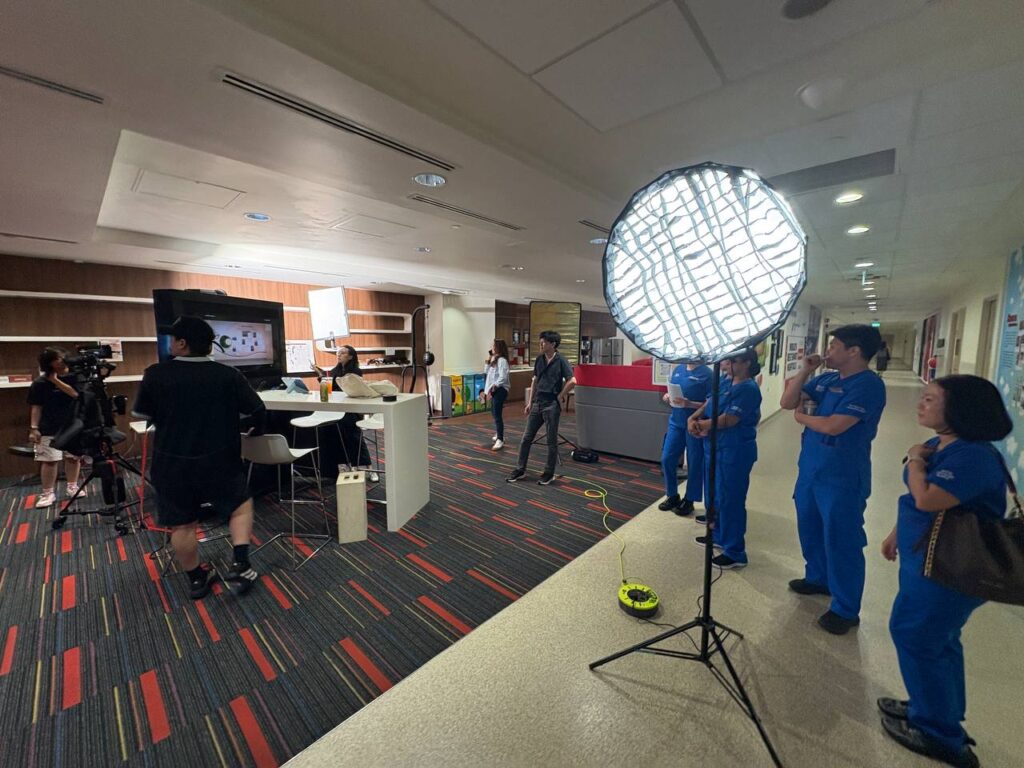
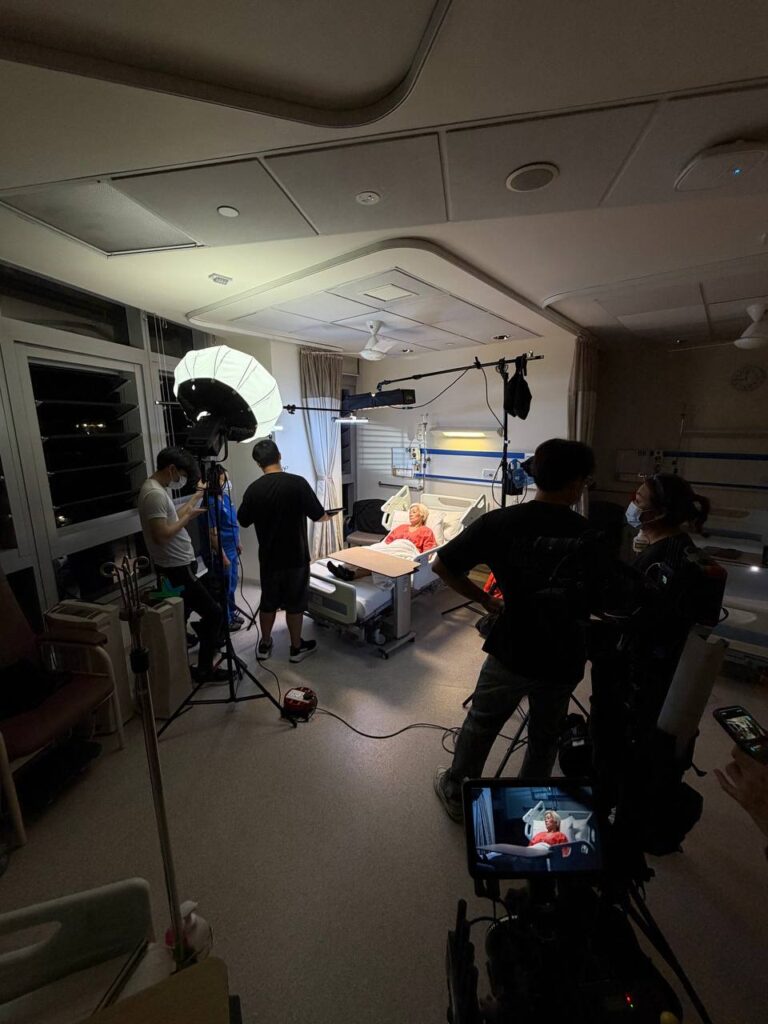
For Raffles Medical Group’s “A Legacy of Care”, some scenes depicting the family’s home life were filmed in a hospital suite rather than a conventional residential location. The art direction team had to source suitable furniture and props to transform the space into a believable home setting.
This required more than simply dressing the room. The team had to consider how the furniture, props, and surrounding details would appear on camera and help establish the right environment for the story.
The result illustrates an important part of healthcare video production: creating a convincing visual narrative often depends on the work behind the scenes as much as the filming itself. From selecting the right location to preparing the set, each decision helps the audience connect with the story being told.
1. Moving Beyond Features: The Power of Medical Storytelling
Medical procedures and treatment options can feel complex or intimidating. Storytelling can make clinical information easier to understand by placing it within a relatable human context.
Authentic Patient Journeys
Patient stories can provide a personal perspective on what it is like to navigate a health condition or treatment journey. With the appropriate consent, a healthcare video can explore the patient’s initial concerns, interactions with the clinical team, treatment experience, and perspective afterwards.
Rather than simply explaining what a treatment does, the story can show why the patient sought care, what questions or concerns they had, and how the healthcare team guided them through the process. These details give audiences a clearer understanding of the experience behind the medical service.
Patient journeys can also make complex healthcare information feel more relevant. When medical procedures are presented within a real-life context, audiences can better understand how a particular service or treatment may fit into a patient’s overall care journey.
Instead of focusing only on procedures, equipment, or facilities, the video can show the people behind the care and how healthcare professionals support patients throughout their experience.
Emphasising “Care” in Healthcare
Healthcare is not limited to the clinical procedure itself. Patients may also experience uncertainty around appointments, treatment decisions, communication, and other practical aspects of receiving care.
A healthcare video can bring these details into the story by showing how doctors, nurses, and other staff support patients throughout the process. For example, a doctor explaining a treatment option, a nurse preparing a patient for a procedure, or a healthcare professional answering questions can communicate the level of attention patients receive beyond the treatment itself.
These everyday interactions may seem simple, but they can help audiences understand the organisation’s approach to patient care. They also add warmth to the video without taking away from its professional and clinical focus.
By showing both the medical and human aspects of healthcare, the video can present a more complete picture of the patient experience.
Balancing Expertise with Human Connection
Medical expertise remains an important part of healthcare communication, but technical information does not always need to lead the story. Interviews with doctors and specialists can provide the clinical explanation, while patient experiences and real interactions add context and make the information easier to follow.
For example, a specialist can explain how a particular treatment works, followed by footage that shows how the healthcare team applies that expertise in a real care setting. This allows the audience to understand both the medical knowledge behind the service and how it translates into patient care.
Visual storytelling can also help break up information-heavy sections. Instead of relying entirely on interviews or talking-head footage, the video can incorporate consultation scenes, interactions between staff and patients, treatment environments, and other relevant details.
This balance allows the video to demonstrate professional expertise while making the content more accessible and relatable to patients, families, and the wider audience.
2. Planning a Healthcare Video Shoot Around the Environment
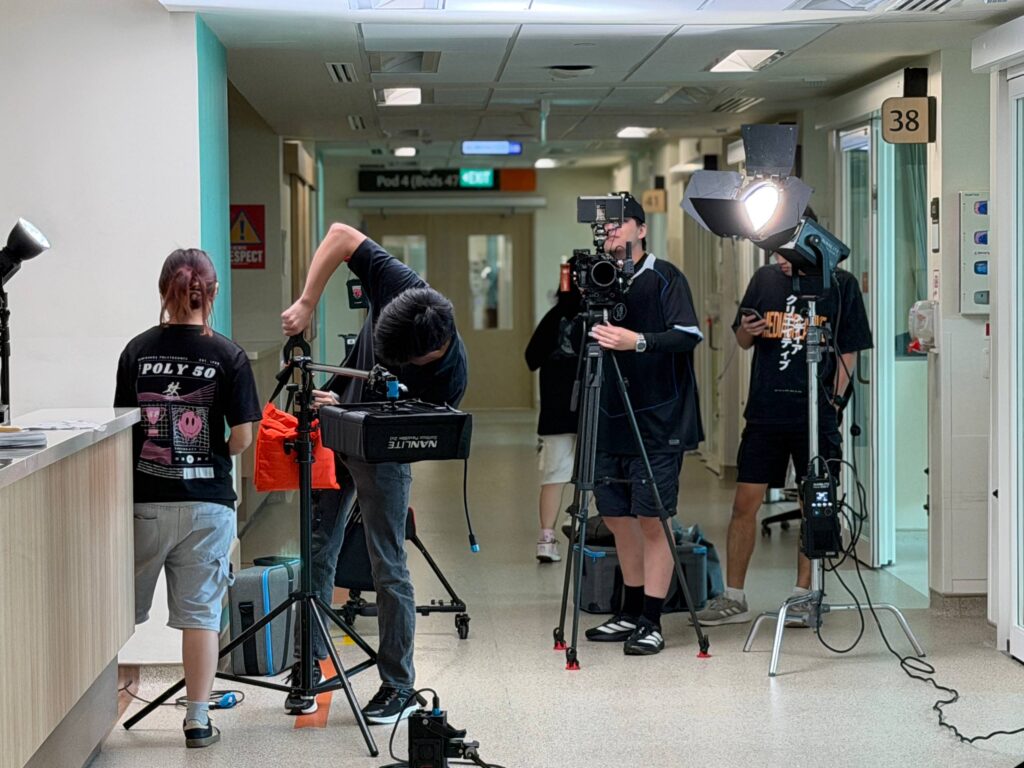
Filming a healthcare story involves more than choosing a suitable camera setup. The production team must also consider the location, the scenes being created, the available space, and how the environment will appear on screen.
In the case of “A Legacy of Care”, the team used a hospital suite to represent the family’s home. This meant preparing an existing space to serve a different storytelling purpose, with furniture and props helping to establish the intended setting.
Preparing the Location Before Filming
Location preparation is an important part of pre-production, particularly when an existing space needs to represent a specific environment in the story.
The production team must consider what the camera will capture, which details belong in the frame, and whether the location supports the intended mood and narrative. Furniture, props, background elements, and camera angles can all influence whether a scene feels convincing.
For the Raffles Medical video, transforming a hospital suite into a home setting required the art direction team to source suitable furniture and props. This behind-the-scenes work helped create a setting that supported the family narrative without relying on a conventional residential location.
Working Within a Healthcare Setting
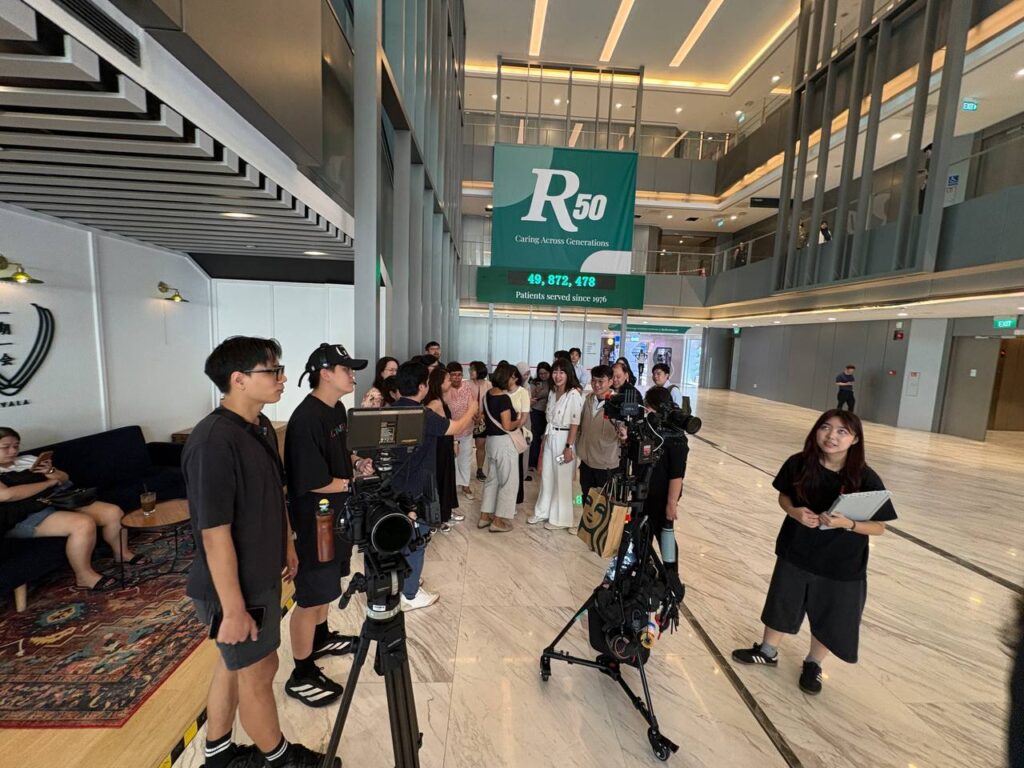
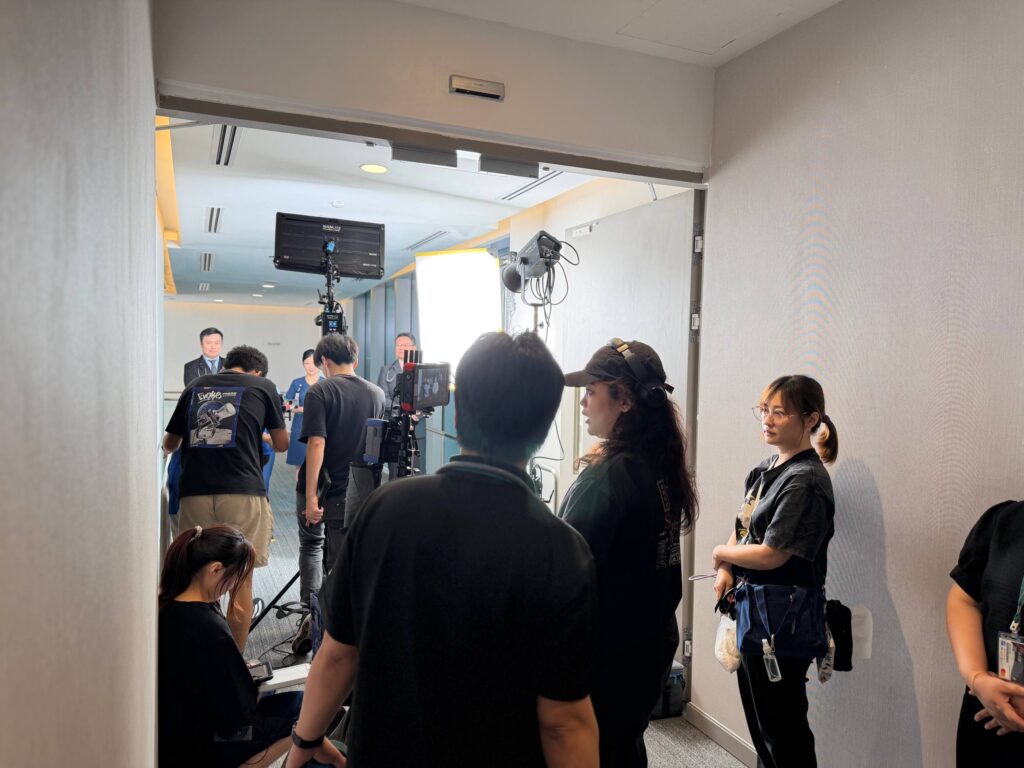
Healthcare locations can come with practical limitations, including restricted areas, limited space, and operational requirements. These considerations can affect where equipment is positioned, how scenes are arranged, and how the filming schedule is planned.
Production teams should discuss location access, filming arrangements, and any site-specific requirements with the relevant representatives before filming begins. Preparing these details in advance helps the crew plan the shoot around the environment rather than making unnecessary adjustments on the day.
Planning for Sensitive Areas and Information
When filming in a healthcare facility, the team should identify approved filming areas and discuss any restrictions with the relevant stakeholders before production.
The filming plan should also account for what may appear in the background, including identifiable individuals, medical records, computer screens, and other sensitive information. These considerations can inform location selection, framing, and the arrangement of each scene.
Addressing these details during pre-production helps the team make informed filming decisions while respecting the requirements of the healthcare organisation and its environment.
3. Creating Convincing Visuals in Healthcare Video Production
A healthcare video needs to present its environment in a way that supports the story, whether the scene takes place in a consultation room, a hospital ward, or a setting created to represent family life.
For “A Legacy of Care”, the production involved more than filming within a hospital. The team also had to transform a hospital suite into a believable home environment, demonstrating how location preparation and art direction can help establish the visual context of a scene.
Art Direction: Making an Existing Space Feel Like Home
Art direction helps shape how an audience understands a location before a character even speaks. Furniture, props, background details, and the arrangement of objects all contribute to the atmosphere of a scene.
For the Raffles Medical video, the art direction team sourced furniture and props to transform a hospital suite into a home setting. These details helped distinguish the family’s domestic environment from the clinical spaces also featured in the story.
This illustrates why art direction should be considered alongside location selection and cinematography. A space does not always need to be a perfect match for the scene from the outset. With careful preparation, an existing location can be adapted to support the narrative.
Lighting and Camera Framing
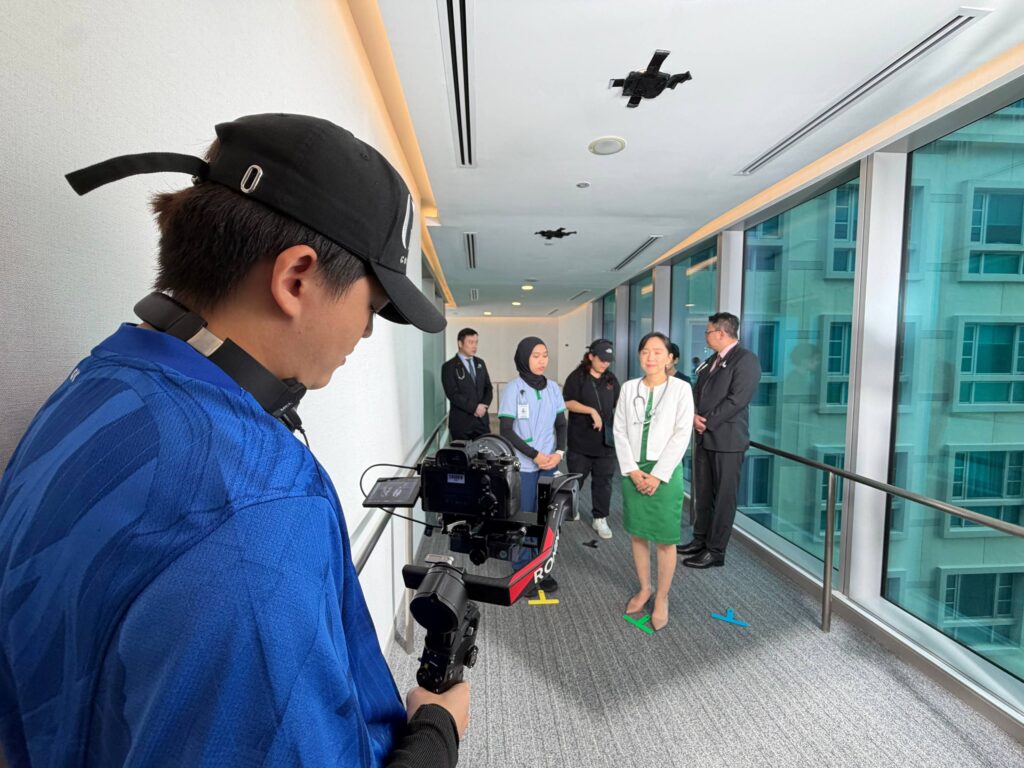
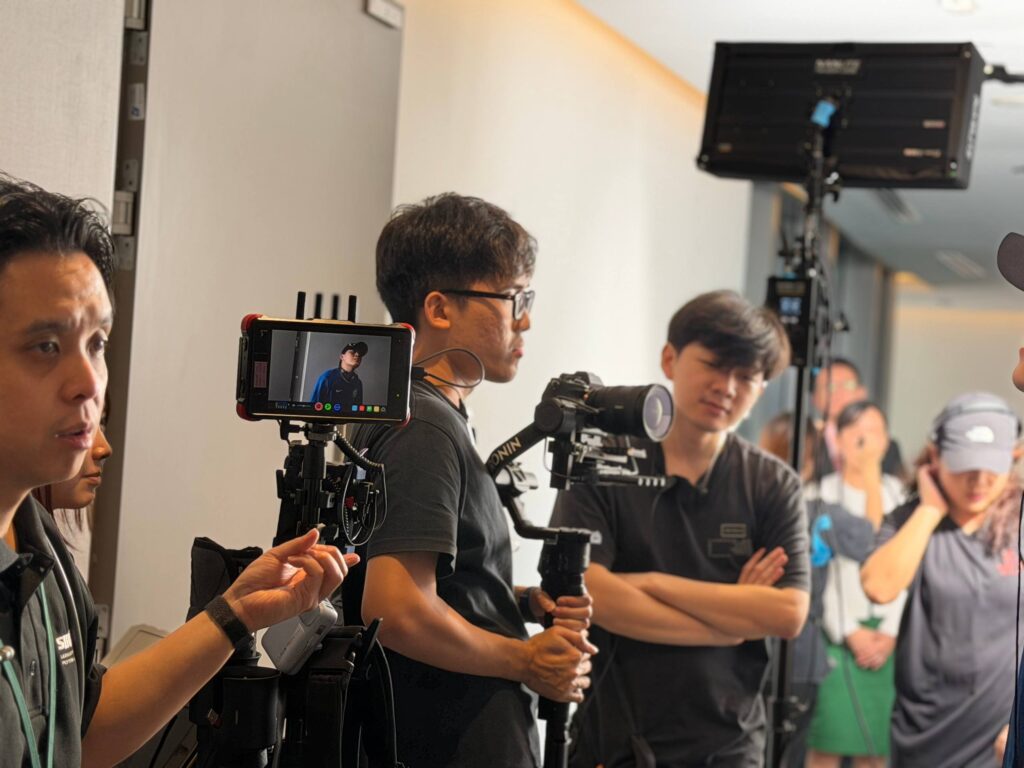
Lighting and camera framing influence how a healthcare environment appears on screen. A carefully framed shot can draw attention to a conversation or interaction while keeping distracting background elements out of view.
Lighting can also help maintain visual consistency between different scenes. However, the approach needs to account for the actual location, available space, and any practical restrictions on equipment placement.
For healthcare productions, the aim is to create clear, considered visuals without losing the character of the environment. The lighting and framing should support the people and actions within the scene rather than distract from them.
Editing for a Connected Narrative
Editing brings the individual scenes together into a coherent story. In a healthcare brand video, the sequence of scenes can help audiences understand both the clinical situation and the people experiencing it.
In “A Legacy of Care”, the narrative moves between family memories and healthcare experiences, connecting personal milestones with moments when medical support becomes important. This structure allows the healthcare setting to form part of the family’s wider story rather than appearing as a series of unrelated facilities or services.
For healthcare organisations, the key is to ensure that each scene contributes to the central message. When the visuals, performances, and editing work together, the finished video can communicate medical expertise while keeping the audience focused on the human experience of care.
Frequently Asked Questions
What types of healthcare videos can a production company create?
Healthcare videos can include corporate brand films, patient stories, doctor interviews, medical explainers, hospital introductions, and patient education videos. The format depends on the organisation’s goals and target audience.
How much does healthcare video production cost in Singapore?
Costs depend on the video’s complexity, filming locations, crew size, talent, and editing requirements. A production company can provide a tailored quotation based on the project brief and deliverables.
What makes an effective healthcare marketing video?
An effective healthcare video communicates medical expertise while making information accessible to its intended audience. Patient-centred stories, professional interviews, and relevant visuals can help bring the message to life.
How long does it take to produce a healthcare video?
The timeline depends on scripting, filming requirements, the number of locations, and post-production. Projects involving multiple scenes or contributors generally require more time for planning, filming, and revisions.
Partner with Vivid Media for Story-Driven Healthcare Videos

Healthcare communications do more than explain medical services. They can also help patients, families, and healthcare partners understand the people, expertise, and care behind those services.
At Vivid Media, we support healthcare video production from concept development and interview planning through on-site filming and post-production. Our approach can be adapted to the requirements of hospitals, clinics, healthcare organisations, and medical brands, with careful consideration for the filming environment and the people involved.
Ready to tell your healthcare story? Contact Vivid Media today to discuss your healthcare video production in Singapore project.


