




Across 2025 and 2026, micro-dramas have gained significant attention as a fast-growing form of short-form entertainment. Built around short episodes, vertical viewing, and fast-moving storylines, the format is designed to capture attention quickly and encourage viewers to continue watching.
For corporate organisations, this creates an interesting opportunity. Traditional onboarding, compliance, and training videos often rely heavily on presentations, policy explanations, or long-form instructional content. While these formats still have their place, some topics can be difficult to make engaging when employees are simply asked to absorb information.
By adapting selected storytelling principles from micro-dramas, organisations can present workplace situations through characters, conflict, and decision-making. Instead of only explaining what employees should do, a video can show what happens when someone is placed in a realistic situation and has to decide what to do next.
What Is a Micro-Drama and Why Does It Capture Attention?
Unlike traditional long-form videos or presentation-based training modules, micro-dramas are structured around short episodes and immediate narrative development. Episodes are often designed for mobile viewing and focus on a specific conflict, interaction, or decision.
Rather than spending several minutes setting up the background, the format typically brings viewers into a situation quickly and gradually reveals what is at stake. Each episode can function as part of a larger storyline or focus on a single moment, making the format flexible enough to adapt to different types of content.
Several characteristics make this format particularly interesting for corporate learning.
An Immediate Situation or Conflict
Rather than spending the opening moments explaining the context, a micro-drama can begin directly with a situation.
An employee receives an unexpected request. A deadline is about to be missed. A customer becomes increasingly frustrated. The viewer immediately understands that something is happening and is given a reason to find out how the situation will unfold.
This approach can be particularly useful for training content, where the learning objective may otherwise take several minutes to introduce. Starting with the problem first gives employees a clear context before introducing the relevant policy, process, or recommended behaviour. The explanation can then follow naturally as the situation develops, rather than being presented as a standalone instruction at the beginning.
Short, Focused Episodes
Instead of covering an entire training topic in a single 20 or 30-minute video, a larger subject can be divided into smaller scenarios. Each episode can focus on one workplace situation, decision, or learning objective.
This structure can also make it easier to organise a series around different stages of onboarding or training. For example, one episode may introduce a workplace challenge, while the next explores how a colleague responds or what happens after a particular decision is made. Breaking the content into smaller parts also helps prevent too many ideas from being introduced within a single video, allowing each scenario to remain focused.
Narrative Tension and Decision Points
The most useful aspect of the format for corporate learning is not simply its fast pace. It is the use of decisions and consequences.
A character may have to choose whether to follow a procedure, challenge a colleague, escalate a problem, or respond to a difficult customer. Instead of immediately revealing the correct answer, the story can first show the pressure or uncertainty surrounding the decision.
This creates a natural point for the learning objective to be introduced. Employees can consider what they would do in the same situation before seeing how the character’s decision affects the outcome. The scenario can then lead into a discussion, an assessment, or a follow-up explanation of the relevant company policy or best practice.
Relatable Workplace Characters
Rather than presenting abstract policies, micro-drama scenarios can centre around situations employees may recognise from their own working environment.
This could involve a new employee trying to understand company culture, a manager dealing with a difficult conversation, or a team member facing pressure to make a decision quickly. The characters do not need to represent dramatic or unusual situations. In fact, everyday workplace interactions may be more effective because employees are more likely to recognise similar situations from their own experience.
When applied carefully, these storytelling elements can give training content a clearer context. The objective is not to turn every corporate policy into entertainment, but to make certain situations easier to recognise, understand, and discuss.
Reimagining Corporate Onboarding with Micro-Drama Formats
Micro-drama is particularly suited to training topics where employees need to understand not only a rule, but the situation in which that rule needs to be applied.

1. Compliance, Ethics, and Cybersecurity Training
Compliance training is often presented through policy documents, slides, or a presenter explaining procedures. A micro-drama can approach the same topic by placing an employee inside a realistic situation.
Imagine the opening scene: it is 4:47 p.m. on a Friday, and a newly hired manager receives what appears to be an urgent message from a senior executive. The sender’s name looks familiar, the tone is convincing, and the request needs to be approved before the end of the day.
At the same time, the manager is dealing with another urgent task and is under pressure to respond quickly.
The episode could end at the point of decision.
The following episode can then explore the correct verification process, while another version of the scenario could show what might happen if the employee proceeds without checking.
Instead of simply listing cybersecurity procedures, the training places those procedures inside the type of pressure and uncertainty employees may actually experience.
2. Company Culture and New-Hire Onboarding
Company values can be difficult to communicate through a presentation alone. Concepts such as psychological safety, collaboration, accountability, and constructive feedback are often easier to understand when employees can see how they apply in everyday situations.
A micro-drama series could follow several new employees during their first few weeks at the company.
One episode might focus on a missed deadline and how the team responds. Another could show a junior employee deciding whether to raise a concern during a meeting. A third could explore a misunderstanding caused by hybrid communication.
Rather than telling new employees that the organisation values open communication, the story can show what open communication looks like in practice.
3. Sales, Customer Service, and Difficult Conversations
Some skills are best understood by observing them in action.
A training scenario could follow an account manager dealing with a frustrated client who is considering ending a major contract. The first episode could show the conversation escalating because the manager becomes defensive or focuses too quickly on solving the problem.
A later episode could revisit the situation using a different approach, showing how active listening, questioning, and de-escalation can change the direction of the conversation.
This format allows employees to observe details that can be difficult to communicate through written instructions, including body language, tone of voice, pauses, and reactions.
Why Micro-Drama Can Be Effective for Corporate Learning
Micro-drama will not replace every type of corporate training. Technical subjects, detailed procedures, and mandatory information may still require traditional instructional formats.
However, for topics involving human behaviour, judgement, communication, and decision-making, a narrative approach can add useful context. It can help employees see how these topics play out in realistic workplace situations, rather than only learning them as abstract rules.
Learning Through Context Rather Than Instructions
A policy can explain what an employee should do. A scenario can show when and why they might need to do it.
For example, an employee may understand the instruction to verify an unusual financial request. Seeing a realistic scenario involving time pressure, a convincing sender, and competing priorities provides additional context around how that decision might arise.
This allows employees to understand not only the correct response, but also the circumstances that can make the decision difficult. The policy remains important, but the story gives the policy a situation.
Shorter Episodes That Fit Into Existing Training Schedules
Breaking a larger topic into shorter episodes can also make training easier to structure.
A 15-minute subject, for instance, does not necessarily need to be presented as one continuous video. It could be organised into several shorter scenarios, each focusing on a different stage of a workplace situation.
This gives learning teams more flexibility when incorporating the content into existing training modules. Depending on the organisation’s learning structure, employees could watch the episodes individually or as part of a larger module.
Designed for Modern Viewing Environments
Micro-dramas are commonly associated with vertical, mobile-first viewing. This format can also be useful when training content is intended to be viewed through internal communication channels or mobile-accessible learning platforms.
Short episodes can make content easier to access in smaller learning sessions or on mobile devices. However, the format should be determined by how employees will actually access the content. A vertical 9:16 series may work well for mobile viewing, while a horizontal format may be more appropriate for desktop-based training or presentations.
The production format should support the learning environment rather than simply follow a consumer trend.
From Training Objectives to a Micro-Drama Series
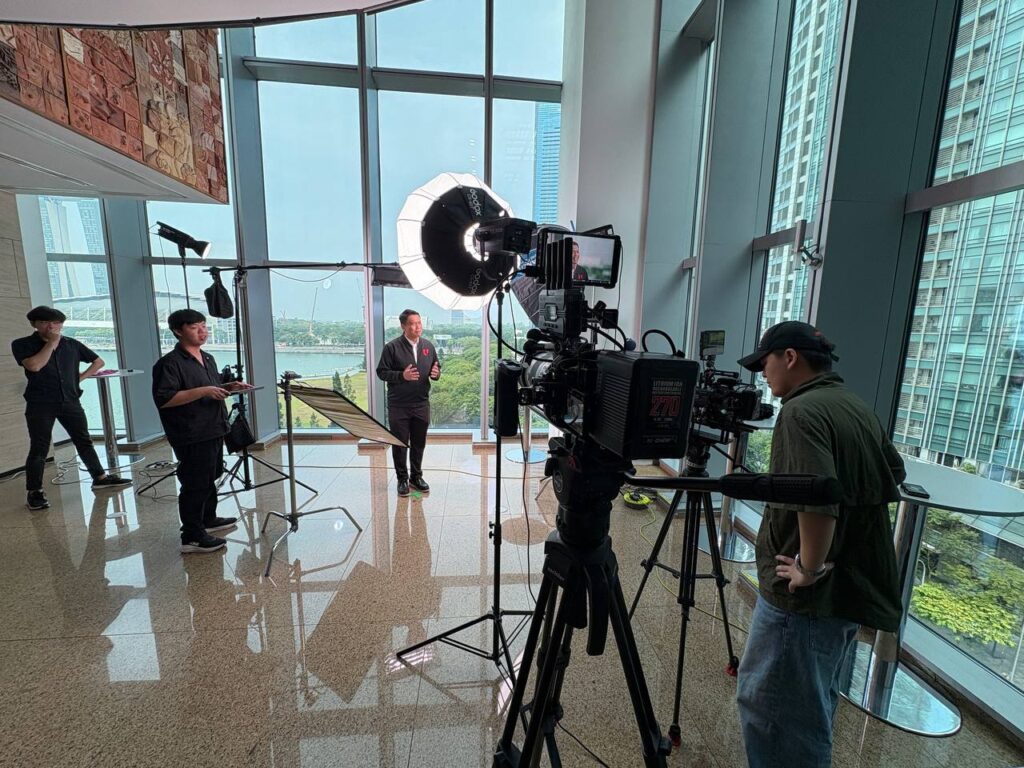
Creating an effective corporate micro-drama requires more than taking a training script and adding actors. The learning objective and the story need to support each other. For Vivid Media, this means approaching the production as both a creative and learning-focused project, from scenario development through filming and post-production.
Identifying the Workplace Scenario
The process begins by identifying the specific behaviour, decision, or situation the training needs to address.
Rather than attempting to turn an entire policy document into a story, the focus can be placed on particular moments employees are likely to encounter. These may include common mistakes, difficult conversations, decision points, or situations where existing training material is frequently misunderstood.
This provides the foundation for a scenario that is both relevant to the organisation and clear enough to communicate within a short episode. Vivid Media can work with the training team to translate these learning points into practical scenarios that have a clear purpose within the wider training programme.
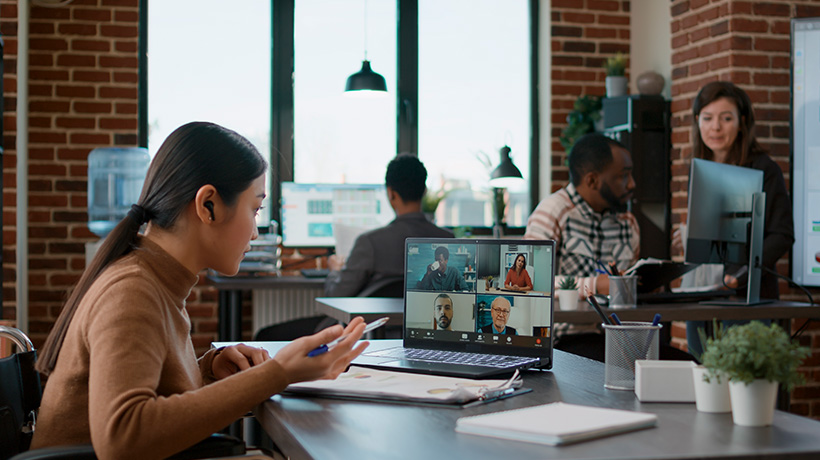
Developing the Story and Characters
The learning objective can then be translated into a workplace situation involving realistic characters, dialogue, and conflict.
The goal is not necessarily to make the training feel like a television drama. The story needs to remain believable within the organisation’s context.
A financial services scenario may involve different pressures and decisions from one set in healthcare, technology, or retail. The characters and situations should reflect the environment employees are familiar with.
Vivid Media’s production team can help shape these scenarios into concise, engaging scripts while keeping the intended learning point at the centre of the story. This helps ensure that the creative elements support the training objective rather than becoming a distraction from it.
Planning the Production
Once the story structure is established, production planning can take into account the number of episodes, locations, cast requirements, filming days, and intended viewing format.
Because the series is structured around short episodes, production can also be planned around multiple scenarios filmed within the same location or production period where appropriate.
Our team can also structure the production workflow to maintain visual and narrative consistency across episodes, particularly when the same characters, locations, or storyline appear throughout the series. Careful planning is particularly important when several episodes share the same characters and narrative timeline.
Editing for Episode-Based Learning
During post-production, Vivid Media crew can structure each episode around a clear situation, development, or decision point, ensuring that the learning objective remains easy to follow without making the content feel like a conventional instructional video.
Editing can also be used to give each scenario more context and impact. For example, pacing, reaction shots, subtitles, on-screen prompts, or carefully selected moments of silence can help draw attention to a key decision or behaviour without interrupting the story.
Depending on how the organisation plans to use the series, Vivid Media can also incorporate subtitles, graphics, supporting text, or discussion prompts. An episode could end at a decision point and be followed by a question for employees, creating an opportunity for discussion or reflection before the training continues.
This gives the micro-drama a function beyond simply telling a story. Each episode can become a practical learning moment that connects the fictional scenario back to real workplace behaviour. The editing approach should therefore support both the narrative and the learning objective, using creative techniques where they add value rather than relying on unnecessary visual effects.
Frequently Asked Questions:
How does the cost of micro-drama production compare to traditional corporate videos?
The cost depends on factors such as the number of episodes, script complexity, cast, locations, filming days, and post-production requirements.
Because multiple episodes may be filmed during the same production period, a series can potentially be planned more efficiently than organising separate shoots for individual training topics. The scope, however, will depend on the specific creative and production requirements.
What is the ideal episode length for a corporate micro-drama?
There is no single ideal duration. The appropriate length depends on the complexity of the workplace situation and the learning objective.
For some topics, a short one-minute scenario may be enough to introduce a decision point. More complex situations may require two or three minutes to establish the context and show how different choices affect the outcome.
The key is to keep each episode focused on a clear scenario rather than trying to cover too many concepts at once.
Can micro-dramas be adapted for multilingual or global teams?
Yes. Depending on the production approach, the content can be prepared for different audiences through subtitles, voiceover, localisation, or adapted on-screen graphics.
For global organisations, it is also important to consider whether workplace situations, dialogue, and examples translate appropriately across different markets and cultures.
Can a micro-drama be used alongside existing training materials?
Yes. A micro-drama does not need to replace an existing training programme.
It can be used to introduce a topic, demonstrate a workplace situation, prompt discussion, or provide a realistic scenario before employees move into more detailed policies, assessments, or instructional material.
Exploring a New Approach to Corporate Training Video

As organisations look for different ways to communicate with employees, the format of training content is becoming just as important as the information itself.
Micro-drama offers one possible approach for turning selected workplace situations into short, story-driven video episodes. For topics involving communication, judgement, behaviour, or decision-making, showing a situation unfold can provide context that written policies or presentation slides may not capture on their own.
Vivid Media can work with organisations to explore how workplace scenarios and training objectives could be developed into a structured video series, from early concept development and script planning through to filming and post-production.
If you are considering a more story-driven approach to onboarding, internal communications, or employee training, get in touch with Vivid Media to discuss what the format could look like for your organisation.


